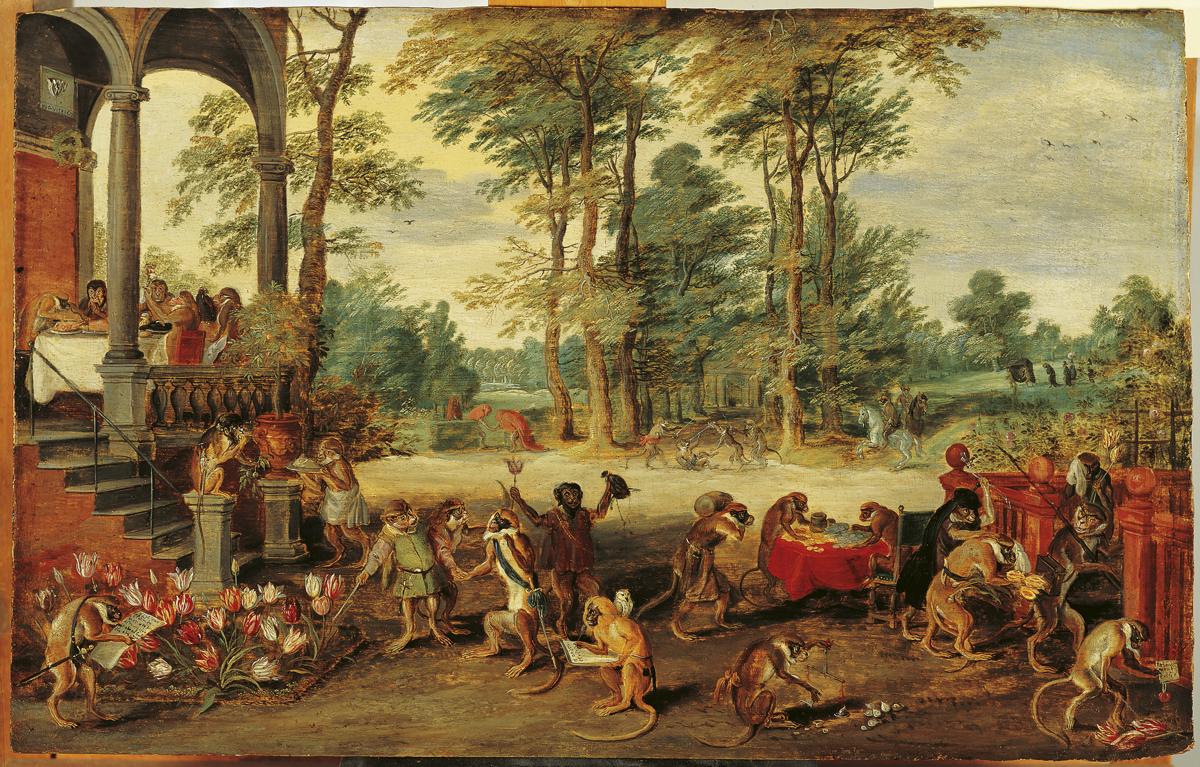
You have heard this story. In the 1630s the Dutch went collectively insane over tulip bulbs. Fortunes were paid for single flowers. When the market collapsed in 1637, merchants were ruined, bankruptcies swept the country, and desperate men threw themselves into the canals of Amsterdam.
It is the founding parable of every financial bubble since. It is also, in most of its memorable details, wrong.
What is true
Start with the part that holds up, because it is strange enough on its own.
Tulips arrived in the Low Countries from the Ottoman Empire in the late sixteenth century, and the Dutch fell hard for them. The most prized varieties were "broken" tulips — bulbs that produced petals streaked with flames of contrasting colour, like the legendary Semper Augustus, white shot through with crimson.
Nobody at the time knew why some bulbs broke. We now know the cause was a mosaic virus, spread by aphids, that disrupted pigment in the petals. The virus also weakened the plant, which meant the most valuable tulips in Europe were the sick ones, and they reproduced slowly and unreliably. Scarcity was built into the biology.
Prices did rise, steeply, through 1636 and into the winter of 1636–37. Trading moved out of gardens and into taverns, conducted in what the Dutch called windhandel — the wind trade — because what changed hands was not bulbs but contracts for bulbs still in the ground, to be delivered months later. Buyers put down little or no cash. In February 1637, at a routine bulb auction in Haarlem, there were no bidders. Prices broke, and within weeks the trade was effectively over.
All of that is documented. Now the parts that are not.
The ruined merchants are a Victorian invention
Almost every dramatic detail in the popular version traces back to one book: Extraordinary Popular Delusions and the Madness of Crowds, written by the Scottish journalist Charles Mackay in 1841 — more than two hundred years after the events.
Mackay was a wonderful storyteller and an indifferent historian. He drew heavily on satirical pamphlets published in 1637 by Dutch moralists, who were not reporting the news but attacking speculation as a sin. He read propaganda as testimony.
The historian Anne Goldgar went to the archives to check. She spent years in Dutch municipal and notarial records, tracing the actual people who traded tulips. Her findings, published in 2007, dismantled the standard account:
- She could not find a single verified case of someone bankrupted by the tulip crash.
- She found no evidence of suicides caused by it. The men throwing themselves into canals do not appear in any contemporary record.
- The trade involved a few hundred people, concentrated in a narrow circle of wealthy merchants and skilled artisans — not the whole of Dutch society.
- The Dutch economy did not crash. The Republic's trade, shipping and wealth carried on through 1637 and after without a visible dent.
The story about a sailor who ate a priceless bulb mistaking it for an onion, and was jailed for it? It appears in Mackay. It does not appear in any seventeenth-century source.
So what did people actually lose?
Here Goldgar's work is more interesting than the myth it replaced.
Because so many contracts were made on credit and on trust, with payment due at a future delivery, the collapse did not mostly destroy money. It destroyed obligations — and in a commercial society built on reputation, that was its own kind of crisis.
What broke in 1637 was not the Dutch economy. It was the assumption that a man's word, given in a tavern over a flower that did not yet exist, would be honoured.
Courts were flooded with disputes nobody knew how to settle. Was a wind-trade contract even enforceable? Dutch authorities largely refused to rule, suspending the contracts and pushing the mess back onto the parties. Buyers who had promised thousands of guilders mostly paid a small fraction, or nothing. Sellers who had expected to be rich simply were not.
The damage was real, concentrated, and social — a rupture of credit and honour among people who had to keep doing business with each other afterwards.
Why the myth survives
The invented version is more useful than the true one. "A whole nation went mad over flowers" is a story you can deploy against any asset you dislike, and it has been deployed against railways, dot-com stocks, housing and cryptocurrencies in turn.
The accurate version is less quotable and more uncomfortable: a small group of well-informed people traded a genuinely scarce good, on credit, with contracts nobody had worked out how to enforce — and when confidence turned, the legal system discovered it had no idea what those contracts meant.
That one has not aged into a curiosity. It describes a problem markets keep rediscovering.
Sources
- Anne Goldgar, Tulipmania: Money, Honor, and Knowledge in the Dutch Golden Age (University of Chicago Press, 2007).
- Peter M. Garber, Famous First Bubbles: The Fundamentals of Early Manias (MIT Press, 2000).
- Charles Mackay, Extraordinary Popular Delusions and the Madness of Crowds (1841) — cited here as the origin of the myth, not as a reliable source.
- Image: Jan Brueghel the Younger, Satire on Tulip Mania, c. 1640, public domain, via Wikimedia Commons.
Comments
Sign in to leave a comment.
New here? Already have an account?